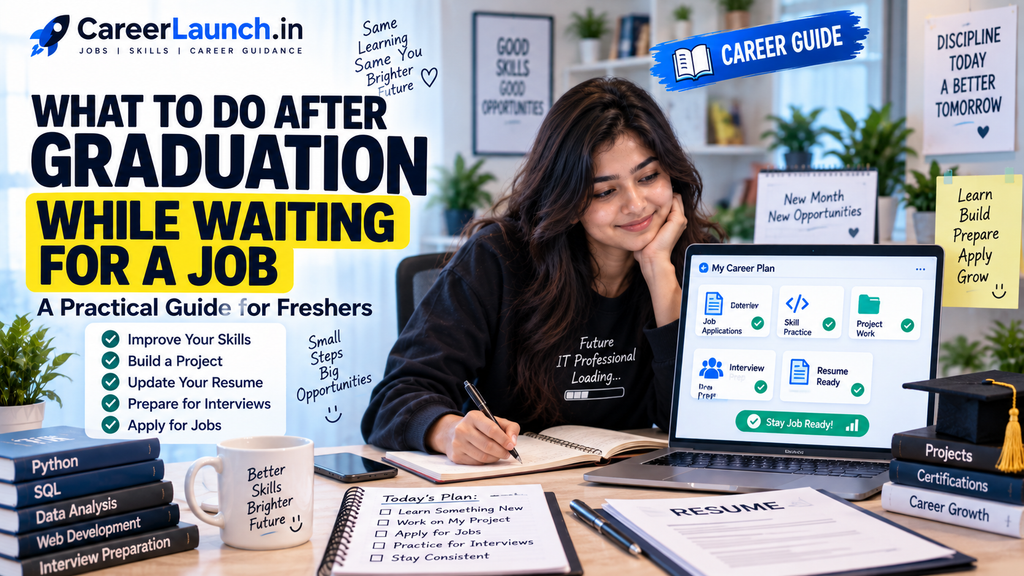
What to Do After Graduation While Waiting for a Job
Graduation is an exciting time. You finish your exams, receive your degree and finally have more freedom.
But after a few weeks, one question may start coming to your mind:
“What should I do now?”
This is especially common when you are waiting for your first job.
Some graduates get an offer before finishing college. Some get an offer but have to wait for their joining date. Others are still searching for their first opportunity.
If you are in this situation, don’t feel like you are wasting your time.
The months after graduation can actually be useful if you use them properly.
If you are wondering what to do after graduation while waiting for a job, you don’t need to learn everything or spend the entire day applying for jobs. You just need a simple plan that helps you stay prepared.
Here are some practical things you can do.
1. Decide What Kind of Job You Want
The first thing to do is decide what type of role you want to target while having this thought “What to Do After Graduation While Waiting for a Job”.
You don’t need to know exactly where you will be five years from now. Just choose one or two roles that match your current skills and interests.
For example:
Software Developer
Data Analyst
QA Tester
Technical Support Associate
Web Developer
Business Analyst
Programmer Analyst
Database Developer
Suppose you know Python and SQL and have worked on a data analysis project. You can start looking at entry-level Data Analyst roles.
If you know Java and have built Java projects, you can target Java developer or software engineer roles.
Having a target makes your preparation easier.
2. Don’t Try to Learn Everything
One common mistake freshers make after graduation is trying to learn too many technologies at once.
They start Python today, Java tomorrow, then move to cloud, AI, data science and web development.
After a few weeks, they may know a little about everything but don’t feel confident in anything.
Instead, choose a few skills that are useful for the roles you want.
For example, if you want a software development role, you could focus on:
One programming language
SQL
Data structures and basic problem solving
Git and GitHub
One development area
If you want a Data Analyst role, you could focus on:
Excel
SQL
Python
Data analysis
Data visualization
You don’t need to become an expert immediately. Build a good foundation first.
3. Work on One Useful Project
If you are thinking about what to do after graduation while waiting for a job, working on a project is one of the best options.
A project gives you something practical to work on and something useful to discuss during interviews.
You don’t need ten projects.
Choose one project that is related to the job you want.
For example:
For software roles:
Expense tracker
Student management system
Simple e-commerce application
Task management application
For data roles:
Sales data analysis
Customer data analysis
Employee data dashboard
Movie or e-commerce data analysis
For web roles:
Portfolio website
Blog website
Simple booking system
Try to build the project yourself instead of simply copying a tutorial.
You can use tutorials when you are learning, but make sure you understand the code and make your own changes instead of thinking What to Do After Graduation While Waiting for a Job.
4. Keep Your GitHub Profile Ready
If you are applying for technical jobs, GitHub can be useful for showing your projects.
Create a clean profile and upload your genuine work.
For each important project, add a simple README.
Mention:
What the project does
Technologies used
Main features
How you built it
What you learned
You don’t need to make your GitHub profile look perfect.
Even a few good projects can be useful if you understand them properly.
If an interviewer asks you about your project, you should be able to explain it without reading from your GitHub page.
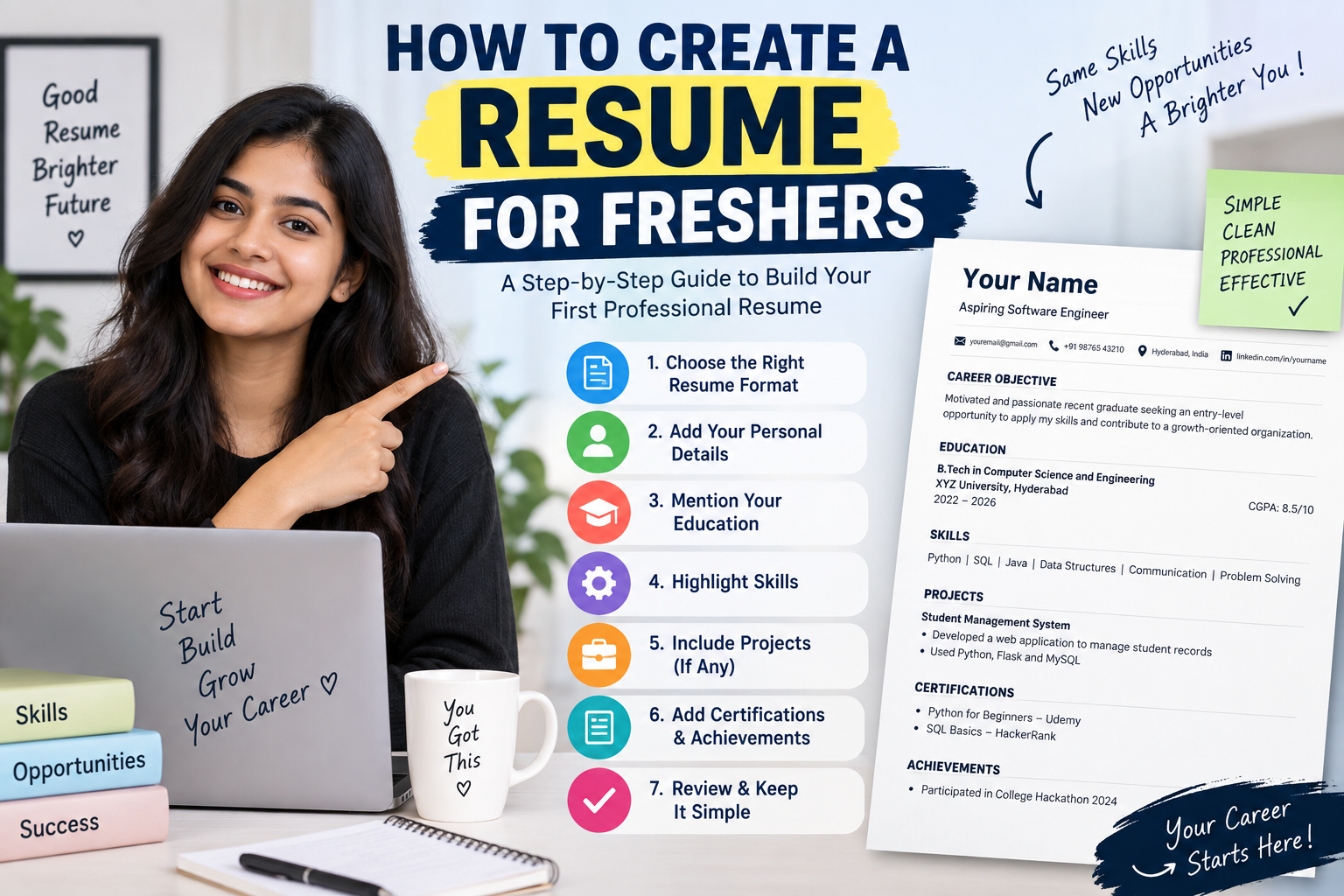
5. Improve Your Resume
Your resume should not be something you create once and never touch again.
While you are waiting for a job, review it.
Check whether it clearly shows:
Your degree
Technical skills
Projects
Internship experience
Certifications
Achievements
GitHub or portfolio link
Also check for spelling mistakes and unnecessary information.
If you are applying for different types of roles, you may need to make small changes to your resume.
For example, a resume for a Data Analyst role should highlight data-related projects and skills. A software development resume should give more attention to programming and development projects.
A simple and relevant resume is better than a resume filled with every skill you have ever studied.
6. Start Applying Consistently
Learning is important, but don’t wait until you feel completely ready before applying.
You will rarely feel 100% ready for your first job.
Start looking for suitable fresher and entry-level openings.
Check:
Official company career pages
LinkedIn
Job portals
Campus alumni networks
Genuine hiring pages
Referrals
Before applying, read the job description.
Check the qualification, batch, experience, skills, location and other important requirements.
Don’t apply randomly just because the job title sounds good.
7. Prepare for Online Tests
Many companies use online assessments as one of the first steps in their hiring process.
The test may include aptitude, logical reasoning, coding, SQL, English or other technical questions depending on the role.
You can prepare for these topics while you are waiting for a job.
If you are targeting software roles, practice basic coding problems regularly.
If you are targeting data roles, spend time on SQL, Excel and basic data concepts.
You don’t have to solve difficult questions every day.
Start with the basics and slowly increase the difficulty.
8. Practice Explaining Your Projects
A lot of freshers prepare technical questions but don’t prepare enough for project questions.
This can become a problem during interviews.
An interviewer may ask:
“Tell me about your project.”
You should be able to explain it in simple language.
Talk about:
What problem you wanted to solve
What you built
Which technologies you used
What your role was
What challenges you faced
What you learned
Don’t memorize a long answer.
Understand your project properly and explain it in your own words.
9. Work on Your Communication
You don’t need perfect English to get a job.
But you should be able to communicate your ideas clearly.
If you are not confident speaking in interviews, practice a little every day.
You can practice these instead of just thinking What to Do After Graduation While Waiting for a Job:
Self-introduction
Project explanation
Strengths and weaknesses
Why should we hire you?
Why do you want this role?
Questions about your education
Record yourself answering questions and listen to the recording.
You may notice that you speak too quickly, repeat certain words or lose track of your answer.
With regular practice, these things can improve.
10. Don’t Spend the Whole Day Applying
When you are unemployed, it can feel like you should spend eight or ten hours searching for jobs.
You don’t have to.
Applying to jobs for the entire day can become tiring, especially when you don’t receive responses.
Instead, divide your day.
For example:
Morning: Search and apply for suitable jobs
Afternoon: Learn or practice technical skills
Evening: Work on your project or prepare for interviews
You can adjust this routine according to your schedule.
The main idea is to balance job search, learning and preparation.
11. Keep Your Documents Ready
Sometimes a company may ask for documents quickly after you are shortlisted.
Keep important documents organized in one safe place.
These may include:
Resume
Degree certificate
Provisional certificate
Marksheets
Government ID
Passport-size photograph
Internship certificates
Course certificates
Don’t upload sensitive documents to random websites.
Only share information through a genuine company application process when it is actually required.
12. Use This Time to Learn About the Industry
Graduation teaches you technical and academic concepts, but working in a company is different.
While waiting for your job, learn some basic things about the industry rather than spending you time on having this What to Do After Graduation While Waiting for a Job.
For example, understand:
How software teams work
What a developer does
What testing teams do
How projects are managed
What Agile means
What Git is used for
How databases are used
How interviews usually work
You don’t need to become an expert.
Just understanding how the workplace works can make your transition easier when you get your first job.
13. Don’t Compare Your Progress With Others
This is probably one of the hardest parts after graduation.
You may see your classmates posting:
“Happy to announce that I joined XYZ company!”
Someone else may share their offer letter.
Another person may already be earning a salary.
Meanwhile, you may still be waiting.
It is normal to feel bad about it.
But everyone’s timeline is different.
Someone may get a job quickly but later switch careers. Someone else may take several months to find the right opportunity and then grow quickly.
Instead of constantly comparing yourself with others, focus on what you can improve today.
14. What If You Already Have an Offer?
If you already received a job offer but are waiting for your joining date, don’t completely stop learning.
Use the waiting period to become more comfortable with the skills that may be useful for your role.
You can also improve your communication, learn workplace basics and work on small projects.
If the company has given you any training material or instructions, go through them properly.
Don’t spend all your time worrying about the joining date.
Use the time to prepare yourself.
15. Make a Simple Weekly Plan
If you are still unsure about what to do after graduation while waiting for a job, create a weekly plan.
For example:
Monday to Friday
Apply for suitable jobs
Practice technical skills
Work on your project
Prepare interview questions
Improve your resume when needed
Saturday
Review your applications and check where you are getting stuck.
Maybe you are getting assessment links but not clearing the tests. If so, spend more time preparing for assessments.
Maybe you are getting interviews but not clearing them. In that case, practice technical and HR questions.
Sunday
Take some rest.
You don’t have to work on your career every minute of the week.
Taking a break can help you start the next week with more energy.
A Simple Routine You Can Follow
If you are still confused about what to do after graduation while waiting for a job, start with this simple routine:
1 hour: Search and apply for jobs
1 hour: Technical practice
1 hour: Project work
30 minutes: Interview preparation
30 minutes: Communication or English practice
You don’t have to follow these timings exactly.
Even if you have only three or four hours available, use them properly.
The important thing is to keep moving instead of spending the entire day worrying about when the job will come.
Final Thoughts
The period between graduation and your first job can feel confusing.
Some days you may feel motivated. On other days, you may feel like nothing is happening.
That’s normal.
If you are wondering what to do after graduation while waiting for a job, don’t think that you need to completely change yourself in a few months.
Start with small things.
Choose the right job roles. Improve the skills you already know. Build a useful project. Keep your resume ready. Practice interviews. Apply to genuine openings and keep track of your applications.
Most importantly, don’t think that waiting for a job means you are doing nothing.
If you are learning, building projects and preparing for interviews, you are still making progress.
Your first job may take some time, but the skills and habits you build during this period can help you long after you get that first offer.